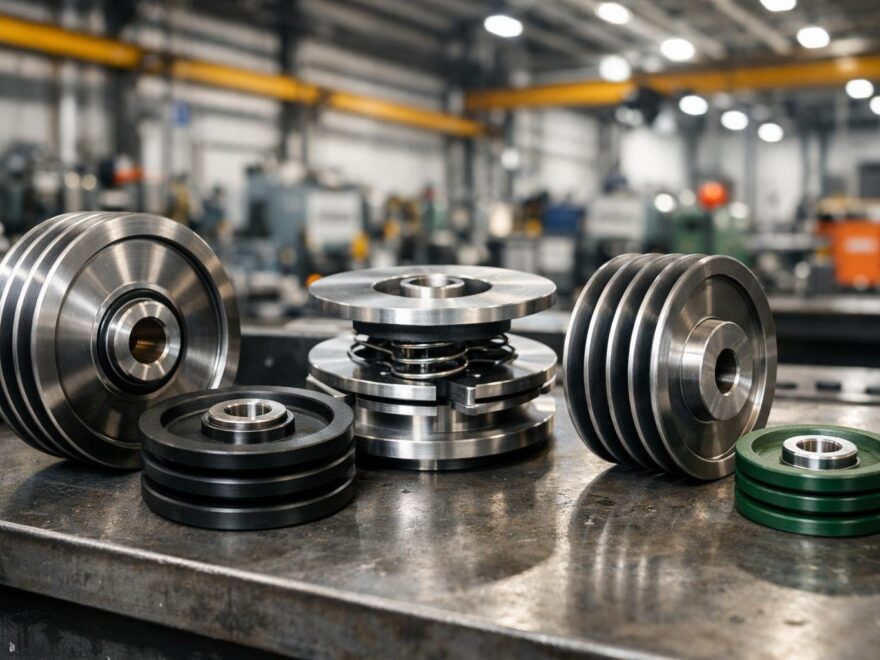
Custom Sheave Product Types and Configurations
Why it matters
Choosing the right sheave setup affects load control, rope life, and downtime. A mismatch can wear out wire rope fast or create alignment problems that spread through the whole system. The details of groove shape, mounting style, and sheave count all change how the assembly performs.
Single sheave blocks
Single sheave blocks are often the simplest option for straight lifts or basic direction changes. They work well where the load path is clear and the rigging layout does not need extra mechanical advantage.
The main limitation is capacity and flexibility. If the load is heavy or the line pull is high, a single sheave can force the rope and hardware to carry more stress than the application should allow.
A common mistake is picking a single sheave block because it looks compact and easy to install. If the rope diameter, side loading, or required lead angle is wrong, the block may wear unevenly and shorten service life.
Multiple sheave assemblies
Multiple sheave assemblies are used when the system needs more load distribution or a more complex reeving pattern. They help manage higher loads, but they also introduce more points where alignment can go wrong.
That tradeoff matters. More sheaves can reduce line pull in the right design, but they also add assembly width, moving parts, and inspection demands.
- Better load sharing across the reeved system
- More hardware to inspect and maintain
- Greater sensitivity to spacing and alignment errors
If one sheave sits out of plane, the rope can scrub the groove edge instead of riding correctly. That kind of wear is easy to miss at first and expensive to correct later.
V-groove wire rope sheaves
V-groove wire rope sheaves are built to guide rope with more defined side support. They are often selected where rope tracking needs tighter control.
The risk is using a groove profile that does not match the rope construction or operating load. Too narrow, and the groove pinches the rope. Too wide, and the rope loses support and pounds the groove during operation.
Engineers usually weigh rope retention against long-term rope wear. A tighter groove can improve tracking, but it may also increase contact pressure and speed up damage if the rope bends under heavy cycling.
Flat groove sheave options
Flat groove sheave options fit applications where the contact pattern or line handling differs from standard wire rope support. They can be useful, but only if the rope or belt style matches the groove design.
The common failure mode is assuming a flat groove is interchangeable with a contoured groove. It is not. If the product geometry does not suit the line material, slippage, edge wear, or unstable tracking can follow.
This is where product selection needs careful review. Different flat groove sheave options can change how the load is carried across the contact surface, and that directly affects wear patterns over time.
Bushed and bearing-mounted sheaves
Bushed and bearing-mounted sheaves differ most in how they handle rotation, speed, and maintenance demands. A bushed sheave can be a solid choice for slower cycles and simpler service conditions.
Bearing-mounted sheaves usually suit higher speeds, more frequent cycling, or tighter operating tolerances. The tradeoff is added complexity and the need to protect the bearing from contamination or poor lubrication practices.
- Bushed designs are simpler and often more forgiving
- Bearing-mounted designs reduce rotational resistance
- Wrong selection can lead to heat, drag, or premature failure
If the duty cycle is underestimated, a bushed unit may wear too quickly. If the environment is dirty or shock-loaded, a bearing setup can fail early unless sealing and maintenance are handled properly.
How to match the configuration to the job
The right choice starts with the actual operating conditions, not just the load rating. Rope type, line speed, duty cycle, reeving layout, and side load risk all need to be checked together.
Problems usually show up when one detail gets ignored. A correct groove on the wrong mounting style, or the right sheave count with poor alignment, can still create a weak system.
Review the full application before ordering custom sheaves. That one step usually prevents the wear, tracking, and service issues that show up after installation.