What Matters Most in a Sheave?
Sheaves are not interchangeable parts in any practical sense. Size, groove shape, bore details, and load rating all affect rope life and system performance. A mismatch can cause rope damage, tracking issues, or premature bearing failure.
Available wire rope sheave sizes and specifications
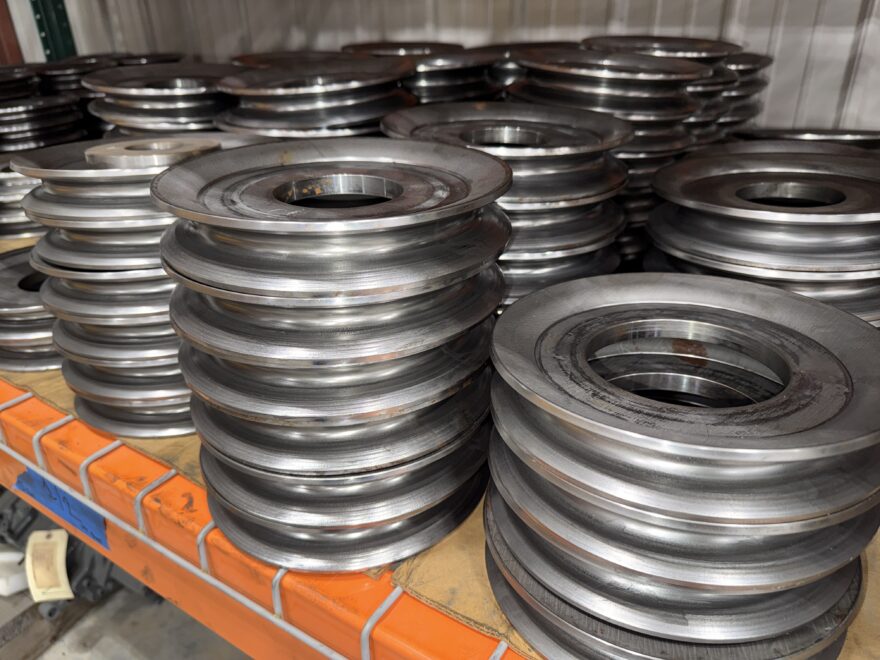
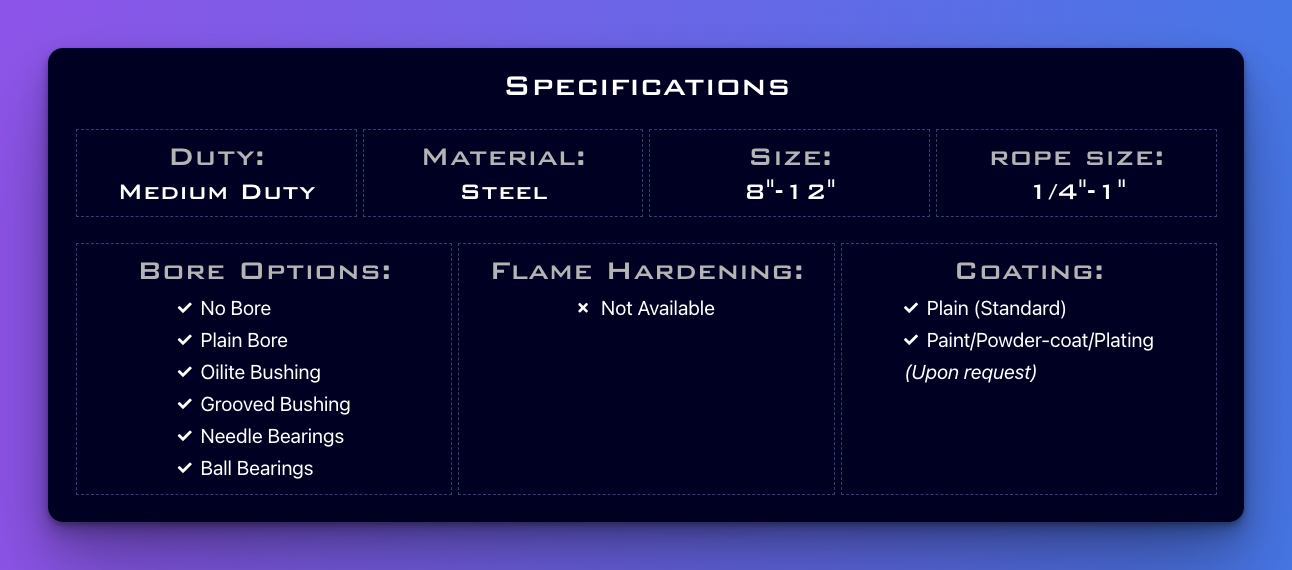
Bear Equipment offers wire rope sheaves in a range of sizes and configurations. The critical point is not just outside diameter. Buyers also need to confirm groove dimensions, face width, bore size, hub style, and bearing arrangement.
A common mistake is choosing a sheave only by matching diameter to an old part. That can fail if the rope size changed, the groove is worn, or the original sheave was undersized for the duty cycle. In lifting and pulling systems, those details directly affect rope seating and side loading.
- Outside diameter and face width
- Groove profile matched to rope construction and size
- Bore, keyway, bushing, or bearing requirements
If any one of those items is off, the assembly may fit poorly or wear faster than expected. The safest approach is to review the full operating conditions before ordering.
Custom fabrication and machining capabilities
Standard parts do not solve every field problem. Custom fabrication and machining are often needed when equipment has limited clearance, older shaft standards, or nonstandard mounting details.
The tradeoff with custom work is precision versus speed. A rushed part can arrive quickly, but small errors in bore tolerance, groove finish, or concentricity can create runout and uneven rope wear. Good fabrication work starts with accurate dimensions and a clear understanding of the application.
Custom work may include modified bores, keyways, special groove geometries, or complete sheave builds for a specific assembly. That flexibility matters most when replacing parts in older systems where original drawings are incomplete or outdated.
Replacement sheaves for existing lifting and pulling systems
Replacement sheaves need more than a visual match. The existing system may have wear patterns, shaft damage, or rope changes that make a direct copy the wrong choice.
One failure mode is replacing only the sheave while ignoring a worn pin, bushing, or bearing seat. That can leave the new part misaligned from day one. Another issue is reusing an old groove specification that already caused rope flattening or birdcaging in service.
For older lifting and pulling setups, it helps to compare current field measurements with the original intent of the system. That is where Bear Equipment can be useful, especially if the goal is to restore function without redesigning the whole assembly.
Technical support for sizing, groove profiles, and load requirements
Technical support matters most before the part is made, not after it arrives. Sheave sizing has to account for rope diameter, rope construction, operating load, fleet angle, and the way the equipment actually runs in service.
Groove profile is a common source of trouble. If the groove is too tight, the rope can pinch and wear early. If it is too loose, the rope may not seat correctly and can deform under load. Those are small geometry errors with expensive consequences.
Load requirements also need careful review. Static load alone is not enough in many systems. Shock loading, start-stop motion, and duty cycle can all change the correct design choice. Working through wire rope sheaves with technical input can prevent ordering a part that looks right on paper but fails in actual use.
Lead times, quoting, and procurement considerations
Procurement gets easier when the quote request is specific. Missing details often create the longest delays, especially for custom or replacement sheaves that need confirmation before machining starts.
At minimum, buyers should provide the rope size, sheave diameter, groove details if known, bore information, and expected load. Photos, sketches, and field dimensions can reduce back-and-forth and help avoid a quote based on assumptions.
- Confirm whether the request is for stock, modified, or fully custom parts
- Identify critical dimensions that cannot vary
- Ask early about bearings, bushings, and any included hardware
Lead time usually depends on complexity, material availability, and how complete the application data is at the start. Better input leads to a better quote, fewer revisions, and a part that is more likely to work the first time. Talk to the sheave manufacturing experts at Bear Equipment today!