Basement Waterproofing Process and Inspection in Norfolk County
Why it matters
A wet basement rarely starts as a single simple problem. Water can enter through cracks, cold joints, window wells, floor seams, or poor grading outside. A proper inspection helps separate the symptom from the source, which is the only way to choose the right repair.
Initial moisture inspection and source identification
The first step is to map where moisture shows up and when it appears. Staining on walls, damp corners, peeling paint, musty air, and white mineral deposits all point to different entry paths.
An inspector should check the wall to floor joint, tie rod holes, foundation cracks, window openings, and plumbing penetrations. Moisture meters help, but readings alone do not prove the entry point. Condensation can look like leakage, and that mistake often leads to the wrong repair.
Timing matters. If water appears only after heavy rain, the issue may be surface drainage or hydrostatic pressure. If dampness stays constant, there may be a plumbing leak or ongoing seepage through porous concrete.
Interior versus exterior waterproofing methods
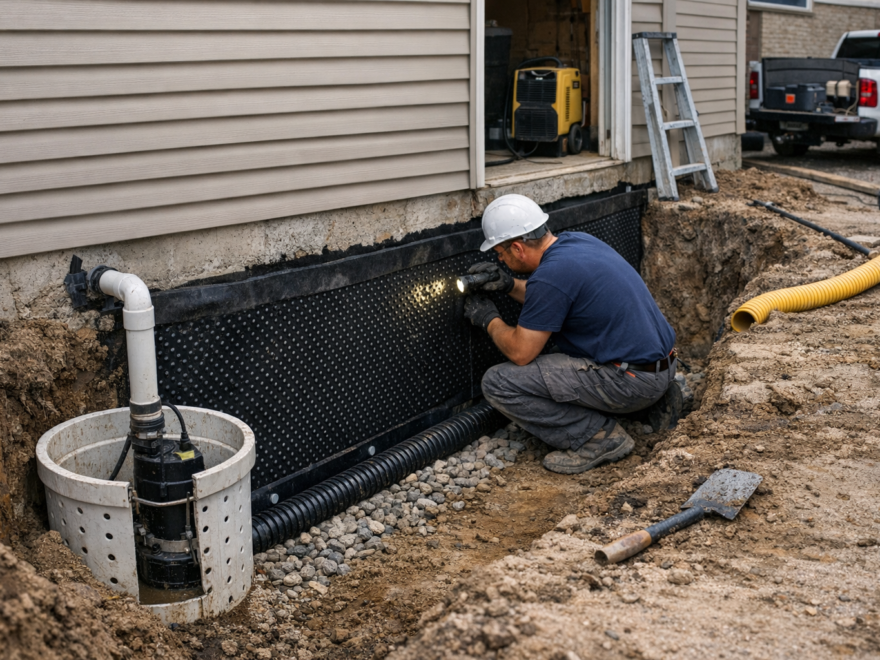
Not every basement needs the same system. Interior waterproofing usually manages water after it reaches the foundation wall, while exterior waterproofing aims to stop water before it enters.
Interior systems can be less disruptive and faster to install. They often include drainage channels and a sump setup. The tradeoff is that the outside wall still gets wet, which may matter if the wall already shows deterioration.
Exterior work can address cracks, membrane failure, and poor backfill conditions. It is often the stronger option for direct wall penetration, but excavation adds cost, access limits, and risk around decks, walkways, and mature landscaping. Choosing the cheaper method without matching it to the failure mode can leave the original problem in place.
Checking drainage paths around the foundation
Waterproofing decisions should include a close look at how water moves around the lot. Gutters, downspouts, grading, window wells, and hard surfaces can all send water toward the foundation if they are set up poorly.
In Norfolk County, site drainage should be reviewed with the same attention as the basement itself. A wall crack repair may fail early if roof runoff still drops beside the house or if the yard slopes back toward the structure. Local guidance on stormwater management helps show how runoff should be directed and controlled.
- Downspouts that discharge too close to the wall
- Soil settlement that creates reverse slope near the house
- Blocked or undersized window well drains
These issues are easy to miss during dry weather. If they are ignored, even a well installed waterproofing system can be overloaded during storms.
Identifying seasonal water intrusion patterns in Norfolk County
Basement leaks often follow a seasonal pattern. Spring snowmelt, frozen ground, heavy summer rain, and fall leaf buildup can each change how water behaves around the foundation.
This pattern matters because some homes leak only during a narrow weather window. An inspection done in dry conditions should still account for owner photos, past repair records, and the timing of previous water events. Without that context, the estimate may miss the true trigger.
Once the cause is clear, the scope should define exactly what will be repaired and what will not. That includes crack injection locations, excavation depth, membrane area, drainage components, sump work, wall access, and cleanup.
Estimating repair scope, materials, and labor needs
Tracking exterior conditions through the year makes the diagnosis more accurate. A simple routine for seasonal basement maintenance can reveal recurring trouble spots before they turn into structural damage or interior mold growth.
Materials and labor depend on the failure type. A single shrinkage crack is very different from widespread seepage along one wall. Clay soil, tight side yard access, finished basement walls, and the need to protect nearby features can all raise labor time.
A weak estimate often bundles everything into one price without explaining the method. That creates risk for both sides. If the inspection is detailed, the repair plan is easier to compare, easier to stage, and less likely to miss the source of the water.