Foundation Drainage and Water Control in Norfolk County
Why it matters
Water around a foundation rarely stays a small problem. It turns into damp basement walls, mould growth, damaged finishes, and pressure against the foundation itself. In Norfolk County, older homes and heavy rain events can expose weak drainage details fast.
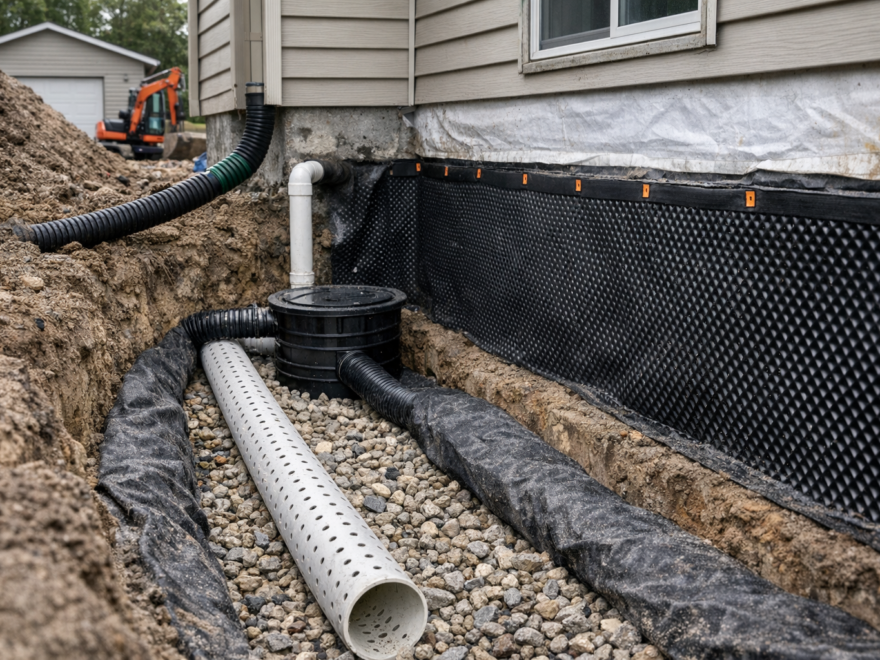
Weeping tile installation and replacement
Weeping tile collects groundwater at the footing level and moves it away before it rises against the basement wall. If the pipe is missing, crushed, or clogged with silt, water has nowhere to go.
Replacement is often necessary in older homes where clay tile has collapsed or modern waterproofing was never installed. A common mistake is replacing the pipe but ignoring filter fabric or proper stone coverage, which lets fines clog the system again.
The tradeoff is cost and access. Exterior replacement is more disruptive, but it addresses the problem at the foundation wall instead of waiting for water to enter first.
Sump pump systems and backup pump options
A sump pump only works if the pit, discharge line, and power supply all work together. One weak point can leave the basement vulnerable during the exact storm when the system is needed most.
Backup protection matters because power outages and primary pump failures often happen during heavy rain. Battery backups help during outages, while water powered backups can run longer in some setups, but they depend on municipal water conditions and proper installation.
- Choose a pump sized for the expected inflow, not just the pit size.
- Use a discharge route that does not send water back beside the foundation.
- Test the float and backup system before wet seasons, not after a failure.
Interior drainage channels along basement perimeters
Interior drainage channels are installed along the inside edge of the basement slab to catch water that reaches the wall or floor joint. They direct that water to a sump basin, where it can be pumped out safely.
This approach is useful when exterior excavation is limited by access, patios, or finished landscaping. The limitation is clear, it manages water after it reaches the foundation perimeter, so it does not reduce exterior soil saturation or hydrostatic pressure on its own.
If the channel is installed without a clear path to the sump, or without addressing wall seepage details, water can still show up at cold joints and cracks.
Downspout extensions and surface water management
Extensions should carry roof water far enough away that it cannot run back toward the wall. In Norfolk County, local stormwater management rules and drainage patterns can affect where that water should go.
Some of the worst basement water problems start at the roofline. Downspouts that discharge too close to the house overload the soil beside the foundation and can mimic a failed footing drain.
A common failure is adding a short splash pad and assuming it is enough. On flat lots or compacted soil, that water often turns and returns straight to the basement wall.
Foundation grading corrections to direct runoff away
The ground around the house should slope away from the foundation, not toward it. Even a good drainage system can struggle if every rainfall is directed back at the wall.
Grading corrections usually involve adding soil near the house and shaping the surface so runoff leaves the foundation area quickly. The mistake here is using topsoil or mulch alone, which settles over time and recreates the low spot.
That is why upgrades should be assessed as a system, including exterior drainage, pump capacity, grading, and wall condition. Good site and foundation drainage planning matters most when an older basement has been patched repeatedly without fixing the water path.
Drainage upgrades for older basements in Norfolk County
Hard surfaces also matter. Walkways, driveways, and patios that pitch toward the home can trap water at the foundation edge even when the lawn looks properly graded.
Older basements often need a combined approach because one repair rarely solves the whole problem. Stone foundations, shallow footings, partial repairs, and decades of settlement can create several entry points for water.
Getting the diagnosis wrong wastes money fast. If the basement shows seepage, efflorescence, or repeated pump cycling, the next step should be a drainage plan that matches how water is actually moving on that property.