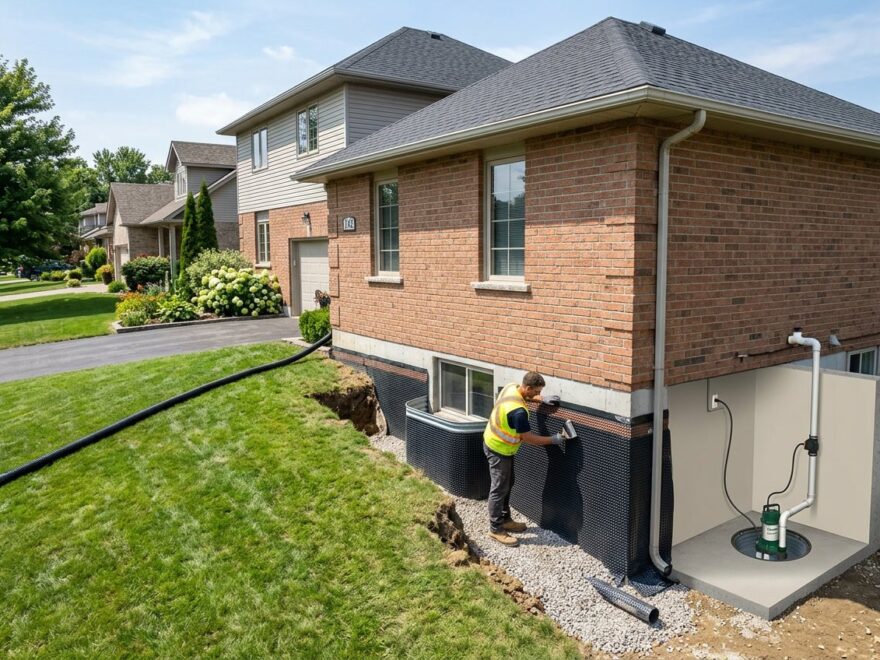
6 Practical Ways to Help Prevent a Wet Basement in Norfolk County, Ontario
A wet basement usually starts as a nuisance, then turns into a repair bill. Damp air, musty smells, water stains, mold growth, and damaged storage are all signs that moisture is getting where it should not. In Norfolk County, where heavy rain, spring melt, and slower-draining ground can all put pressure on a foundation, prevention matters a lot more than cleanup.
Most wet basement problems come back to the same few issues: poor drainage, roof water dumping too close to the house, cracks or weak points in the foundation, or groundwater building pressure around the basement walls. For homeowners in Norfolk County, the smartest move is usually to deal with water outside first, then improve interior protection where needed.
The CMHC guide to fixing a damp basement is still one of the more practical homeowner references on the subject.
1) Keep gutters and downspouts working properly
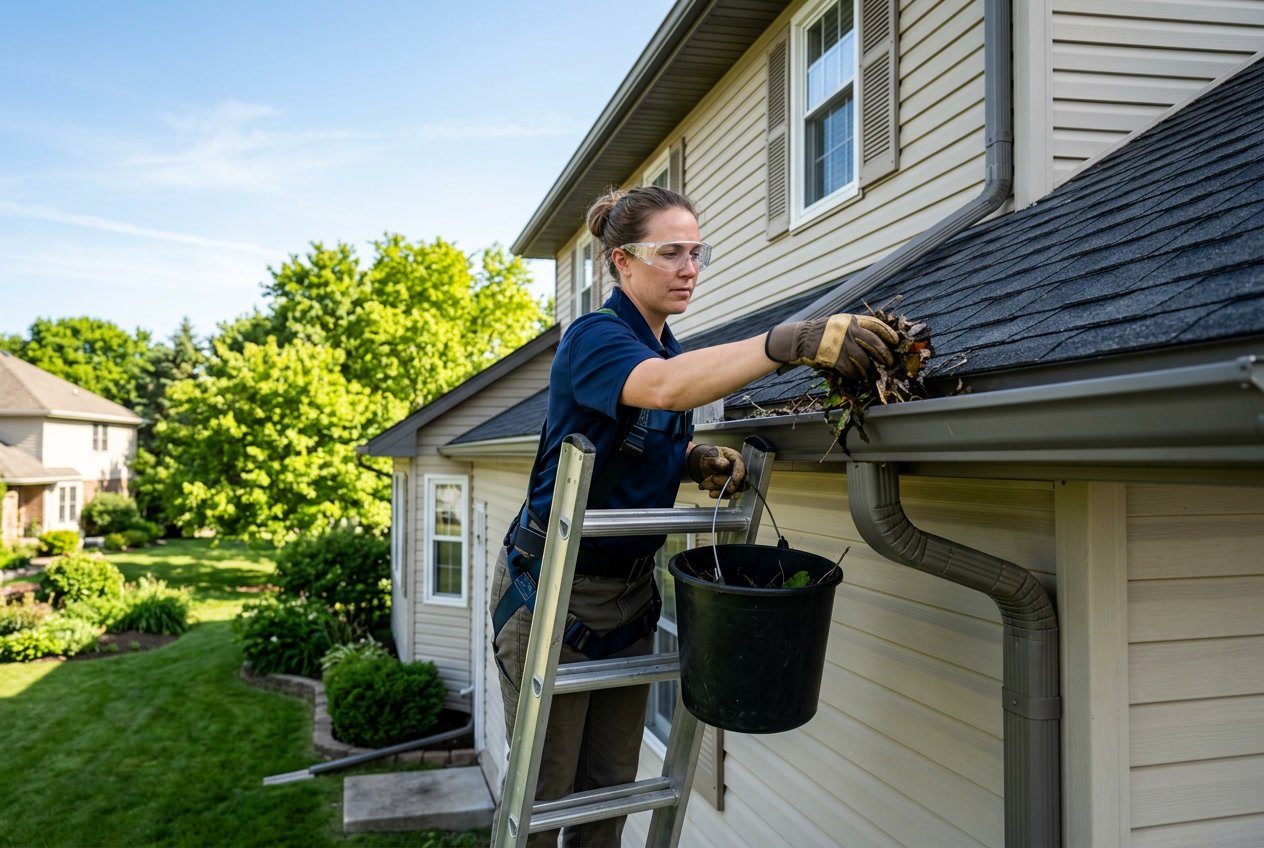
A lot of basement moisture starts at the roofline. When gutters are clogged or downspouts discharge too close to the home, water ends up soaking the soil around the foundation. That added saturation increases the chance of seepage, especially during longer rainy stretches.
Cleaning gutters, checking for leaks, and extending downspouts well away from the foundation are simple steps that make a real difference. CAA Ontario also points to this as a key flood-prevention measure, especially during heavy rain events and spring runoff. Their advice on helping safeguard a home against flooding in Ontario lines up well with what most waterproofing pros already see on site.
2) Make sure the ground slopes away from the house

If the soil around the home pitches toward the house instead of away from it, rainwater and meltwater will naturally collect beside the foundation. Over time, that constant moisture load can lead to seepage, foundation stress, and recurring dampness or water in the basement.
Re-grading can be one of the most effective long-term improvements, particularly on older lots where settlement has changed the original slope. This is also where the Norfolk County angle matters. Some properties deal with broader drainage issues beyond just the house itself, so the County’s drainage information and municipal drain resources can be useful background for local property owners.
3) Seal obvious cracks, but do not treat patching like the full solution
Cracks in basement walls or floors are easy places for moisture to enter. Small repairs with hydraulic cement or similar materials can help block minor leaks and are often worth doing, especially when the opening is visible and accessible.
That said, patching a crack does not remove the water pressure outside the wall. If the drainage problem is still there, the leak often comes back. Crack sealing works best as one part of a broader wet basement prevention plan, not as the whole plan.
4) Use a sump pump where groundwater or drainage conditions call for it
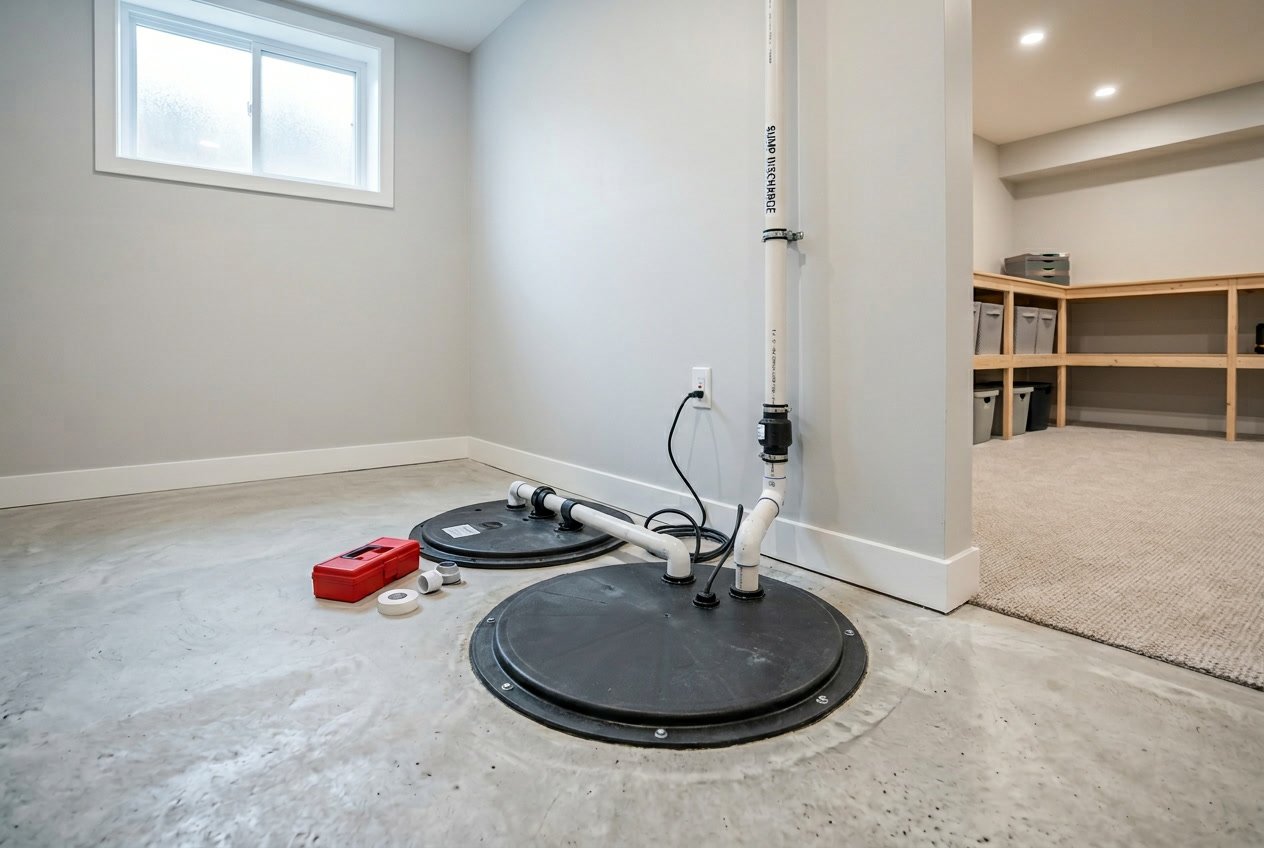
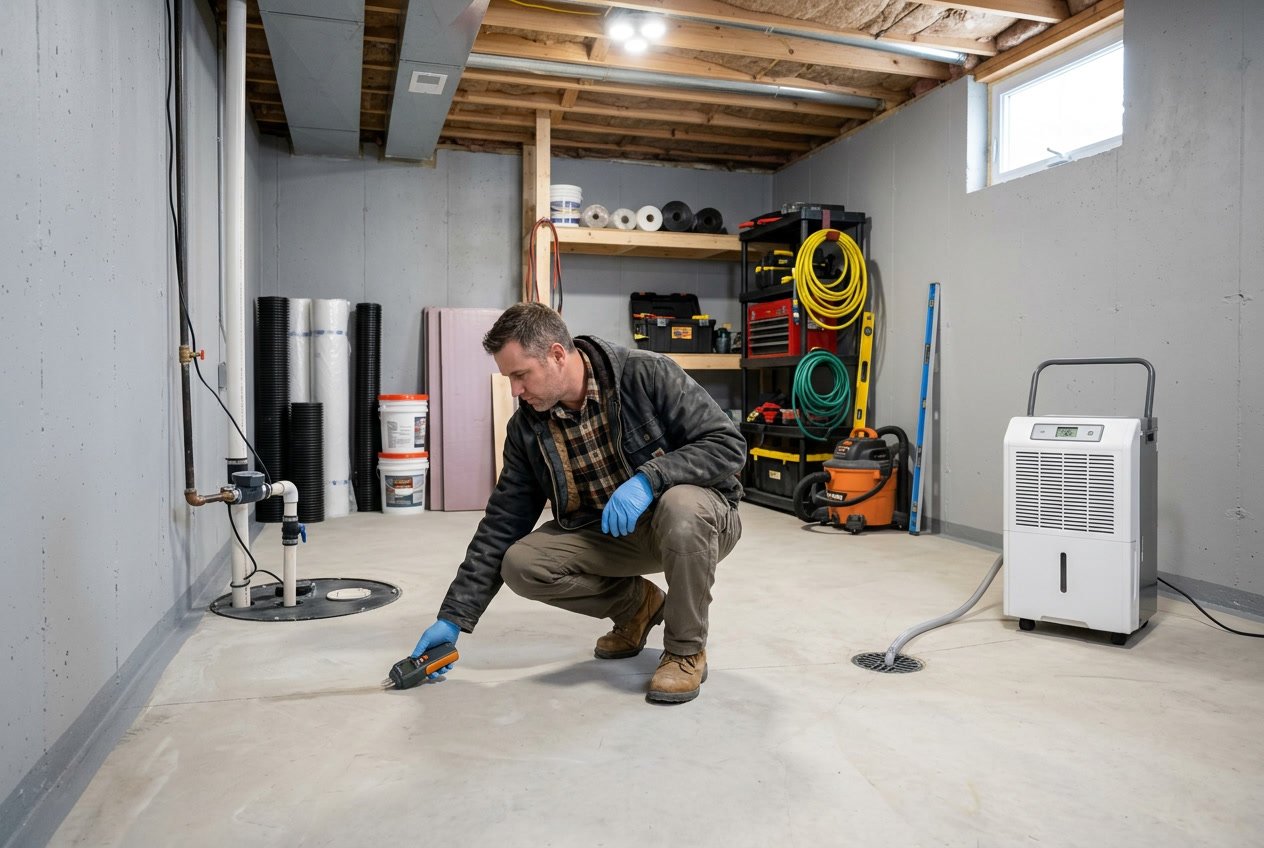
Some Norfolk County homes benefit a lot from a sump pump, especially where groundwater stays high or where water tends to collect under the slab or around the footing drains. A sump pump gives that water somewhere to go before it spreads across the basement floor.
If a home already has a sump pump, it should be tested regularly and ideally paired with backup power. Municipal basement flood-prevention programs often include sump pumps for a reason. They are one of the more practical active defenses once water pressure becomes a recurring issue. Toronto’s basement flooding protection program is a decent example of how seriously Ontario municipalities treat this measure.
5) Consider interior drainage for recurring seepage
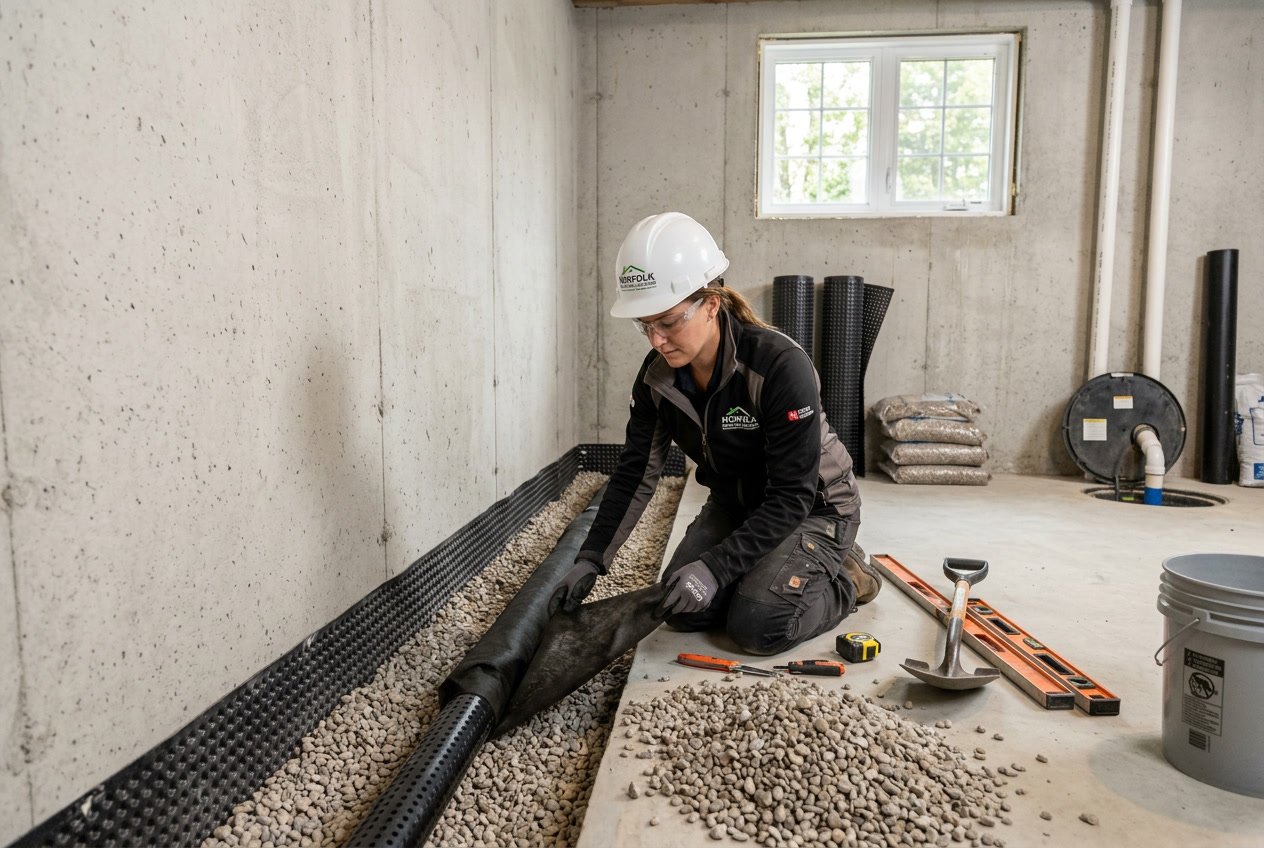
When water repeatedly enters along the wall edge, cove joint, or under the floor, an interior drainage system can be the more realistic answer. These systems are designed to collect water below the basement floor and channel it to a sump pit for removal.
This approach is often less disruptive than full exterior excavation, especially on properties with finished landscaping, decks, walkways, or limited access around the foundation. It does not solve every situation, but it can be a strong fit when the issue is persistent seepage rather than one isolated leak.
6) Use exterior waterproofing when the foundation itself is the problem
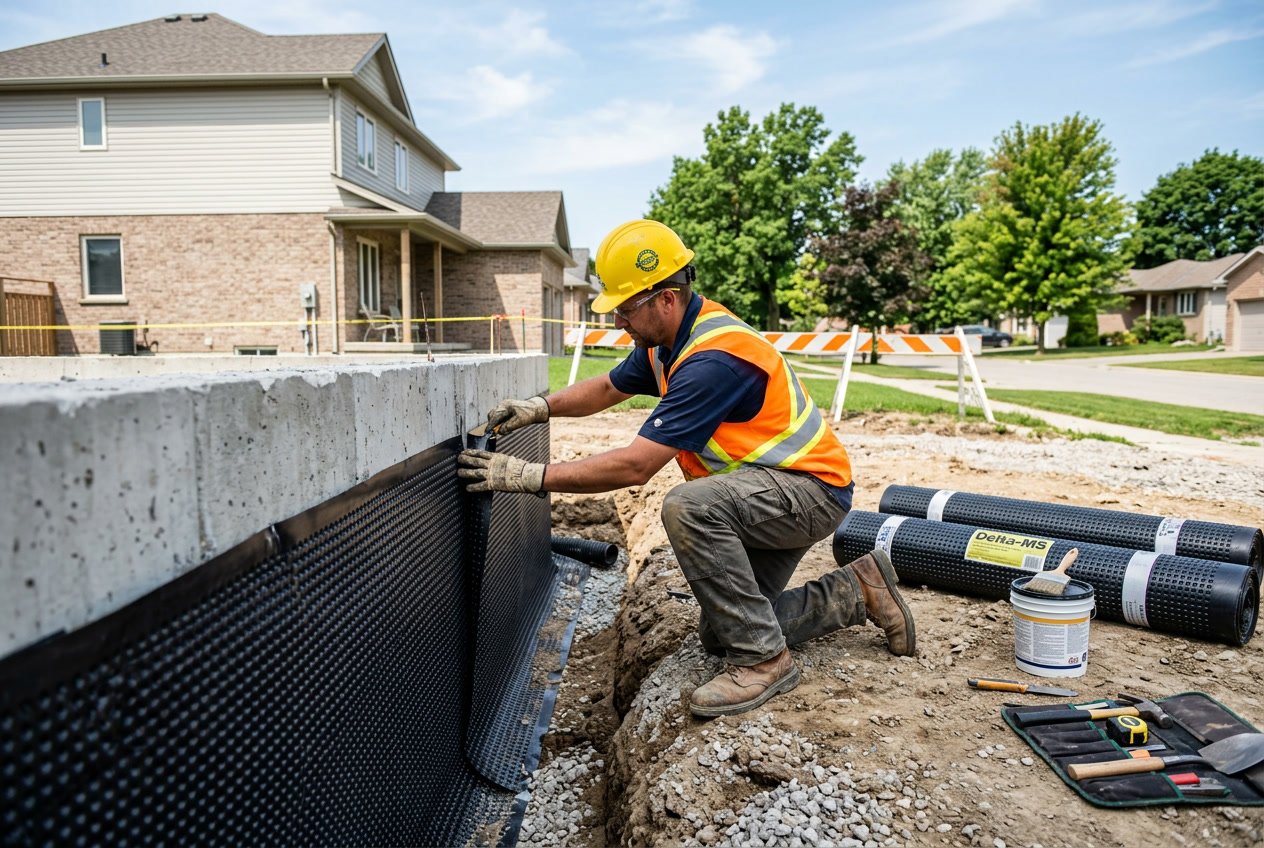
Exterior waterproofing is the bigger job, but sometimes it is the right one. If water is entering through deteriorated foundation walls, failed exterior protection, or recurring leakage from the outside in, stopping the water before it reaches the basement wall is often the better long-term fix.
This usually involves excavation, surface prep, repair of damaged areas, and application of a true waterproof membrane. It is more invasive and more expensive than interior work, but it addresses the issue closer to the source. For homeowners trying to understand the broader provincial side of flood and water risk, Ontario’s flood preparedness guidance is also worth reviewing.
Why Wet Basement Problems Show Up in Norfolk County
Norfolk County properties can run into a mix of conditions that make basement moisture harder to ignore. Heavy rainfall, spring thaw, freeze-thaw cycles, and soil that does not always move water away quickly can all increase the load on a foundation. Add aging cracks, neglected gutters, or poor grading, and a damp basement becomes a lot easier to explain.
That is why the best results usually come from a combination of fixes, not a single magic product. Roof drainage, grading, crack repair, pumping, and waterproofing all have their place depending on the house and the source of the water.
Final Thoughts
Wet basement prevention in Norfolk County is mostly about controlling where water goes before it has a chance to get inside.
Keep runoff away from the foundation, correct grading issues, stay on top of cracks, and add drainage or pumping systems where the property needs more protection. Done properly, that is what keeps a basement dry enough to use instead of turning it into an ongoing problem.